
Before Your Consultation
Everything you need to know before visiting Dr. Jaytesh Pillay.
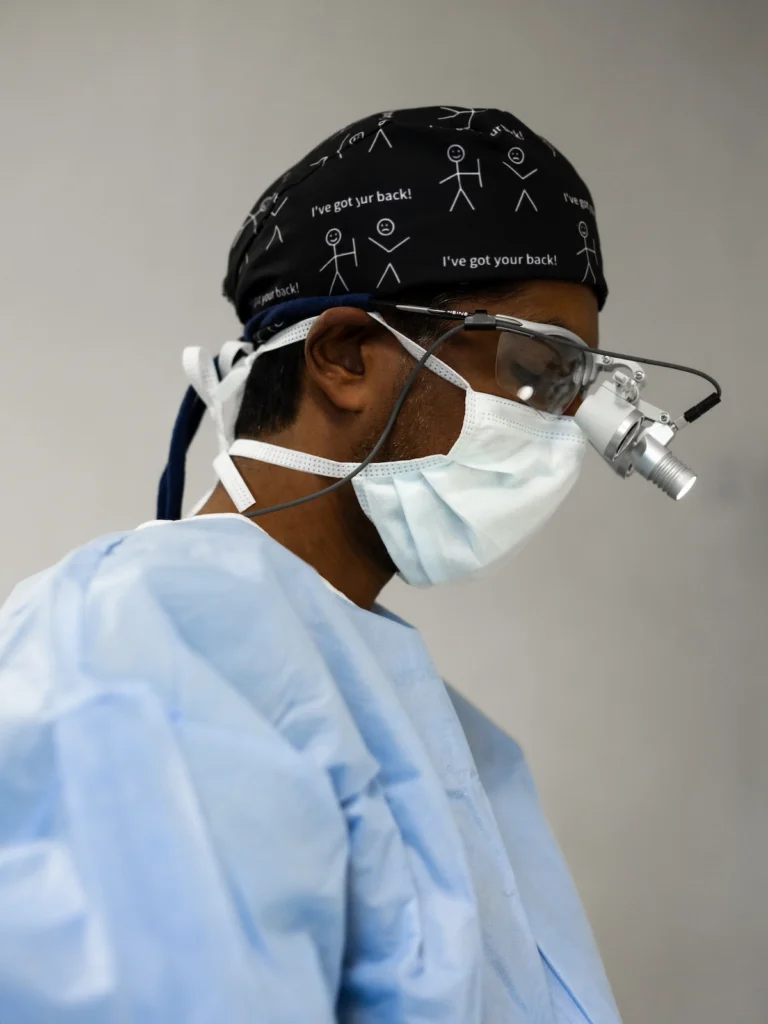
Understanding Modern Spine Surgery
Spine surgery is often surrounded by fear, misinformation and outdated assumptions.
Many patients arrive for consultation with concerns shaped by stories they have heard, information they have read online or misconceptions that no longer reflect modern spinal care.
Advances in surgical techniques, imaging, planning technologies and patient selection have transformed spine surgery over the past several decades.
This page addresses some of the most common myths surrounding spinal surgery and explains the evidence-based realities behind them.
What To Expect During Your Consultation
Your First Appointment
The goal of your consultation is to gain a thorough understanding of your condition and provide clear guidance regarding the most appropriate treatment options based on your individual needs.
During Your Consultation
- Review of symptoms
- Medical history assessment
- Physical examination
- Review of MRI scans and imaging
- Discussion of diagnosis
- Treatment recommendations
- Opportunity to ask questions
Personalised Treatment Plan
Every treatment plan is individualised according to your condition, symptoms, lifestyle, goals and clinical findings. Dr Jaytesh Pillay will discuss all suitable treatment options with you, ensuring you have the information needed to make confident and informed decisions about your care.
What To Bring To Your Appointment
Preparing For Your Consultation
To help maximise the value of your appointment and enable a comprehensive assessment, please bring any relevant medical information available to you.
Imaging Studies
- MRI scans
- CT scans
- X-rays
Medical Documentation
- Referral letters
- Previous specialist reports
- Surgical records
Medication Information
- Current medication list
- Relevant medical history
Why This Information Matters
Bringing complete and up-to-date medical information allows Dr Jaytesh Pillay to make an accurate diagnosis, fully understand your condition and recommend the most appropriate treatment plan. If you are unsure whether a document or scan is relevant, it is generally helpful to bring it with you for review during your consultation.
Patient Responsibilities
Helping Us Provide The Best Care
Excellent care is built on a partnership between you and your healthcare team. By following these simple guidelines, you can help us provide safe, effective and personalised treatment throughout your care journey.
Before & During Your Care
- Share your complete medical history.
- Inform us of any allergies or medications.
- Ask questions if anything is unclear.
- Follow your personalised treatment plan.
- Contact us if your symptoms worsen or change.
- Inform the practice if you are unable to attend your appointment.
Working Together
Open communication and active participation help us deliver the highest standard of care. We encourage you to discuss any concerns, ask questions and keep us informed throughout your treatment and recovery so we can support you every step of the way.
MORE INFORMATION
Practice Information & Patient Guidelines
Appointments & Communication
To help ensure a smooth consultation and provide the best possible care, please keep the following in mind.
- Arrive 10–15 minutes before your appointment.
- Bring relevant scans, reports and referral letters.
- Clinical advice cannot usually be provided via email or telephone.
- Our team is happy to assist with treatment-related enquiries where possible.
Medical Aid & Billing
Understanding your medical aid and billing responsibilities helps ensure a seamless treatment experience.
- Medical aid cover depends on your individual plan and benefits.
- Our team can assist with authorisations and supporting documentation.
- Professional fees may differ from medical aid reimbursement rates.
- Patients remain responsible for applicable co-payments or outstanding balances.
Prescriptions & Medical Certificates
Prescriptions and medical certificates are provided according to your individual clinical assessment.
- Medical certificates are issued where clinically appropriate.
- Prescriptions relate only to conditions assessed and treated by Dr Jaytesh Pillay.
- Repeat prescriptions may require a follow-up consultation.
- Please contact the practice if you experience unexpected medication side effects.
Rehabilitation & Recovery
Recovery is personalised and may include additional support services to optimise your outcome.
- Physiotherapy
- Rehabilitation programmes
- Biokinetics
- Occupational therapy
- Wound care where required
Your recovery plan will be tailored to your procedure, condition and individual rehabilitation goals.
Common Myths
Myth #1: Back Pain Can Only Be Treated With Surgery
Click to reveal the truth
Fact:
Most cases of back pain can be treated without surgery. Physiotherapy, exercise programmes, rehabilitation, medication and lifestyle interventions often play an important role in treatment. Surgery is generally reserved for specific conditions where it is clinically indicated.
Myth #2: Back Pain Means You Will Have Pain Forever
Click to reveal the truth
Fact:
Many patients experience significant improvement once the underlying cause of their symptoms has been identified and appropriately managed. Appropriate treatment, regular exercise, lifestyle modifications and, where necessary, medical or surgical intervention can all contribute to long-term improvement.
Myth #3: You Should Avoid Exercise If You Have Back Pain
Click to reveal the truth
Fact:
Appropriate exercise is often one of the most effective treatments for back pain. Exercise programmes should be tailored to the individual’s condition and guided by an appropriately qualified healthcare professional.
Myth #4: If I Can Still Walk, My Nerve Problem Cannot Be Serious
Click to reveal the truth
Fact:
Nerve compression may still cause weakness, numbness, balance difficulties or progressive neurological symptoms even when a person remains able to walk. Early specialist assessment is important whenever neurological symptoms develop.
Myth #5: Spine Surgery Has A Very Low Success Rate
Click to reveal the truth
Fact:
When performed for the correct indication and in appropriately selected patients, spinal surgery can provide meaningful improvements in pain, function and quality of life. Careful assessment and patient selection are key to achieving the best possible outcomes.
Myth #6: I Will Be Paralysed If I Have Spine Surgery
Click to reveal the truth
Fact:
This is one of the most common concerns patients have. Modern spinal surgery benefits from advances in surgical techniques, imaging, navigation technology, careful planning and patient selection. Paralysis following spinal surgery is an extremely unlikely complication.
Myth #7: Spinal Implants Will Trigger Airport Security Scanners
Click to reveal the truth
Fact:
Modern spinal implants are commonly made from titanium and generally do not cause problems when passing through airport security systems. If you have concerns about travelling after surgery, these can be discussed during your consultation.
Myth #8: A Spinal Fusion Means I Will Never Bend Again
Click to reveal the truth
Fact:
A spinal fusion only stabilises the specific spinal segment being treated. Most patients retain a significant amount of overall spinal mobility and are able to return to normal daily activities following recovery.
Myth #9: A Spinal Fusion Means I Will Never Play Sport Again
Click to reveal the truth
Fact:
Many patients successfully return to recreational activities and sport following recovery. Return-to-sport recommendations are individualised and depend on the patient’s condition, the procedure performed and their rehabilitation progress.
Myth #10: I Will Need To Stay In Bed For Weeks After Surgery
Click to reveal the truth
Fact:
Modern recovery programmes encourage early mobilisation whenever appropriate. Many patients begin moving on the first day after surgery as part of a structured rehabilitation plan designed to promote healing and reduce complications.
Myth #11: My Mattress Is Causing My Back Pain
Click to reveal the truth
Fact:
Current evidence has not shown a consistent link between a particular type of mattress and lower back pain. The most important consideration is choosing a mattress that is comfortable and provides appropriate support for your individual needs.
Myth #12: Back Pain Is Just Part Of Getting Older
Click to reveal the truth
Fact:
Although age-related changes within the spine are common, persistent or severe back pain should not simply be accepted as a normal part of ageing. Many effective treatment options are available to improve symptoms and quality of life.
Myth #13: Surgery Is Only Successful If All Pain Disappears
Click to reveal the truth
Fact:
The primary goal of spinal surgery is to improve pain, restore function and enhance quality of life. While many patients experience substantial pain relief, some residual symptoms may remain, particularly in cases involving long-standing nerve compression or chronic degeneration.
Myth #14: If My X-Ray Is Normal, I Don't Need An MRI
Click to reveal the truth
Fact:
X-rays mainly show the bones of the spine and may not identify problems involving the discs, nerves, spinal cord or other soft tissues. Depending on your symptoms and examination findings, additional investigations such as an MRI or CT scan may be required.
Myth #15: Scoliosis Is Caused By Carrying A Heavy School Bag
Click to reveal the truth
Fact:
Current medical evidence does not support a link between carrying heavy school bags and the development of scoliosis. Most cases of scoliosis have no clearly identifiable cause, although children should still avoid carrying unnecessarily heavy school bags.
Myth #16: Sciatica Is A Disease
Click to reveal the truth
Fact:
Sciatica is not a disease or diagnosis on its own. It is a symptom describing pain that radiates down the leg due to irritation or compression of a spinal nerve. Identifying the underlying cause is essential for determining the most appropriate treatment.
Myth #17: Everyone Needs A Back Brace After Spine Surgery
Click to reveal the truth
Fact:
Not all patients require a brace after spinal surgery. The decision depends on several factors, including the type of surgery performed, the area of the spine treated, bone quality and the individual treatment plan. Many patients recover successfully without the use of a brace.
Myth #18: Wearing A Back Brace Will Make My Muscles Weak
Click to reveal the truth
Fact:
When prescribed appropriately and used for the recommended duration, back braces do not generally cause significant muscle weakness. In selected patients, they can provide additional support and comfort during the recovery process.
Common Myths
Myth #1: Back Pain Can Only Be Treated With Surgery
Click to reveal the truth
Fact:
Most cases of back pain can be treated without surgery. Physiotherapy, exercise programmes, rehabilitation, medication and lifestyle interventions often play an important role in treatment. Surgery is generally reserved for specific conditions where it is clinically indicated.
Myth #2: Back Pain Means You Will Have Pain Forever
Click to reveal the truth
Fact:
Many patients experience significant improvement once the underlying cause of their symptoms has been identified and appropriately managed. Appropriate treatment, regular exercise, lifestyle modifications and, where necessary, medical or surgical intervention can all contribute to long-term improvement.
Myth #3: You Should Avoid Exercise If You Have Back Pain
Click to reveal the truth
Fact:
Appropriate exercise is often one of the most effective treatments for back pain. Exercise programmes should be tailored to the individual’s condition and guided by an appropriately qualified healthcare professional.
Myth #4: If I Can Still Walk, My Nerve Problem Cannot Be Serious
Click to reveal the truth
Fact:
Nerve compression may still cause weakness, numbness, balance difficulties or progressive neurological symptoms even when a person remains able to walk. Early specialist assessment is important whenever neurological symptoms develop.
Myth #5: Spine Surgery Has A Very Low Success Rate
Click to reveal the truth
Fact:
When performed for the correct indication and in appropriately selected patients, spinal surgery can provide meaningful improvements in pain, function and quality of life. Careful assessment and patient selection are key to achieving the best possible outcomes.
Myth #6: I Will Be Paralysed If I Have Spine Surgery
Click to reveal the truth
Fact:
This is one of the most common concerns patients have. Modern spinal surgery benefits from advances in surgical techniques, imaging, navigation technology, careful planning and patient selection. Paralysis following spinal surgery is an extremely unlikely complication.
Myth #7: Spinal Implants Will Trigger Airport Security Scanners
Click to reveal the truth
Fact:
Modern spinal implants are commonly made from titanium and generally do not cause problems when passing through airport security systems. If you have concerns about travelling after surgery, these can be discussed during your consultation.
Myth #8: A Spinal Fusion Means I Will Never Bend Again
Click to reveal the truth
Fact:
A spinal fusion only stabilises the specific spinal segment being treated. Most patients retain a significant amount of overall spinal mobility and are able to return to normal daily activities following recovery.
Myth #9: A Spinal Fusion Means I Will Never Play Sport Again
Click to reveal the truth
Fact:
Many patients successfully return to recreational activities and sport following recovery. Return-to-sport recommendations are individualised and depend on the patient’s condition, the procedure performed and their rehabilitation progress.
Myth #10: I Will Need To Stay In Bed For Weeks After Surgery
Click to reveal the truth
Fact:
Modern recovery programmes encourage early mobilisation whenever appropriate. Many patients begin moving on the first day after surgery as part of a structured rehabilitation plan designed to promote healing and reduce complications.
Myth #11: My Mattress Is Causing My Back Pain
Click to reveal the truth
Fact:
Current evidence has not shown a consistent link between a particular type of mattress and lower back pain. The most important consideration is choosing a mattress that is comfortable and provides appropriate support for your individual needs.
Myth #12: Back Pain Is Just Part Of Getting Older
Click to reveal the truth
Fact:
Although age-related changes within the spine are common, persistent or severe back pain should not simply be accepted as a normal part of ageing. Many effective treatment options are available to improve symptoms and quality of life.
Myth #13: Surgery Is Only Successful If All Pain Disappears
Click to reveal the truth
Fact:
The primary goal of spinal surgery is to improve pain, restore function and enhance quality of life. While many patients experience substantial pain relief, some residual symptoms may remain, particularly in cases involving long-standing nerve compression or chronic degeneration.
Myth #14: If My X-Ray Is Normal, I Don't Need An MRI
Click to reveal the truth
Fact:
X-rays mainly show the bones of the spine and may not identify problems involving the discs, nerves, spinal cord or other soft tissues. Depending on your symptoms and examination findings, additional investigations such as an MRI or CT scan may be required.
Myth #15: Scoliosis Is Caused By Carrying A Heavy School Bag
Click to reveal the truth
Fact:
Current medical evidence does not support a link between carrying heavy school bags and the development of scoliosis. Most cases of scoliosis have no clearly identifiable cause, although children should still avoid carrying unnecessarily heavy school bags.
Myth #16: Sciatica Is A Disease
Click to reveal the truth
Fact:
Sciatica is not a disease or diagnosis on its own. It is a symptom describing pain that radiates down the leg due to irritation or compression of a spinal nerve. Identifying the underlying cause is essential for determining the most appropriate treatment.
Myth #17: Everyone Needs A Back Brace After Spine Surgery
Click to reveal the truth
Fact:
Not all patients require a brace after spinal surgery. The decision depends on several factors, including the type of surgery performed, the area of the spine treated, bone quality and the individual treatment plan. Many patients recover successfully without the use of a brace.
Myth #18: Wearing A Back Brace Will Make My Muscles Weak
Click to reveal the truth
Fact:
When prescribed appropriately and used for the recommended duration, back braces do not generally cause significant muscle weakness. In selected patients, they can provide additional support and comfort during the recovery process.
Practice Policies
To ensure a safe, professional and respectful environment, we kindly ask that all patients observe the following practice policies.
- Photography and video recording are not permitted.
- Clinical advice is provided during consultations only.
- Treatment recommendations are personalised to each patient.
- Your privacy and confidentiality are always protected.
Practice Policies
To ensure a safe, professional and respectful environment, we kindly ask that all patients observe the following practice policies.
- Photography and video recording are not permitted.
- Clinical advice is provided during consultations only.
- Treatment recommendations are personalised to each patient.
- Your privacy and confidentiality are always protected.